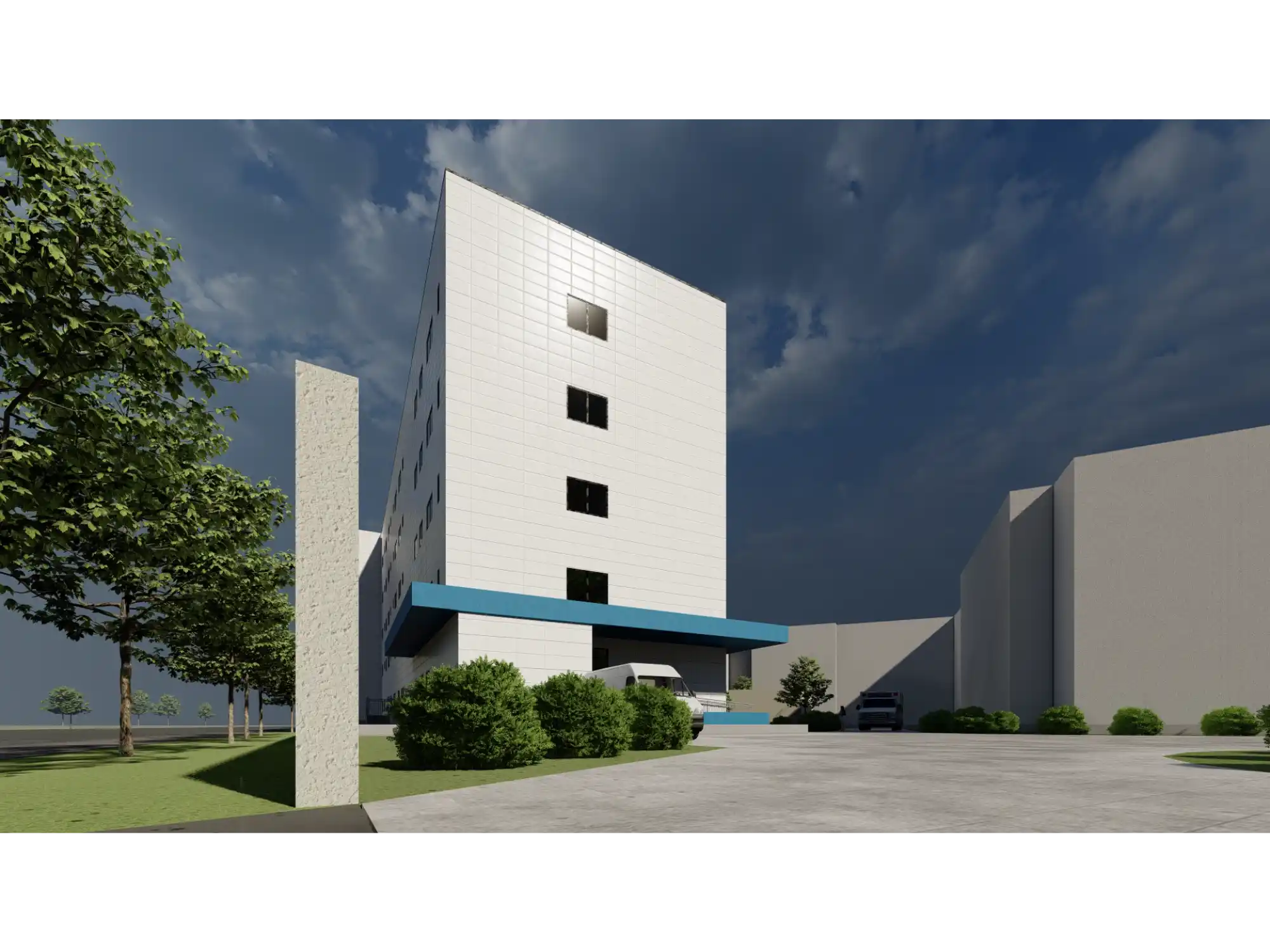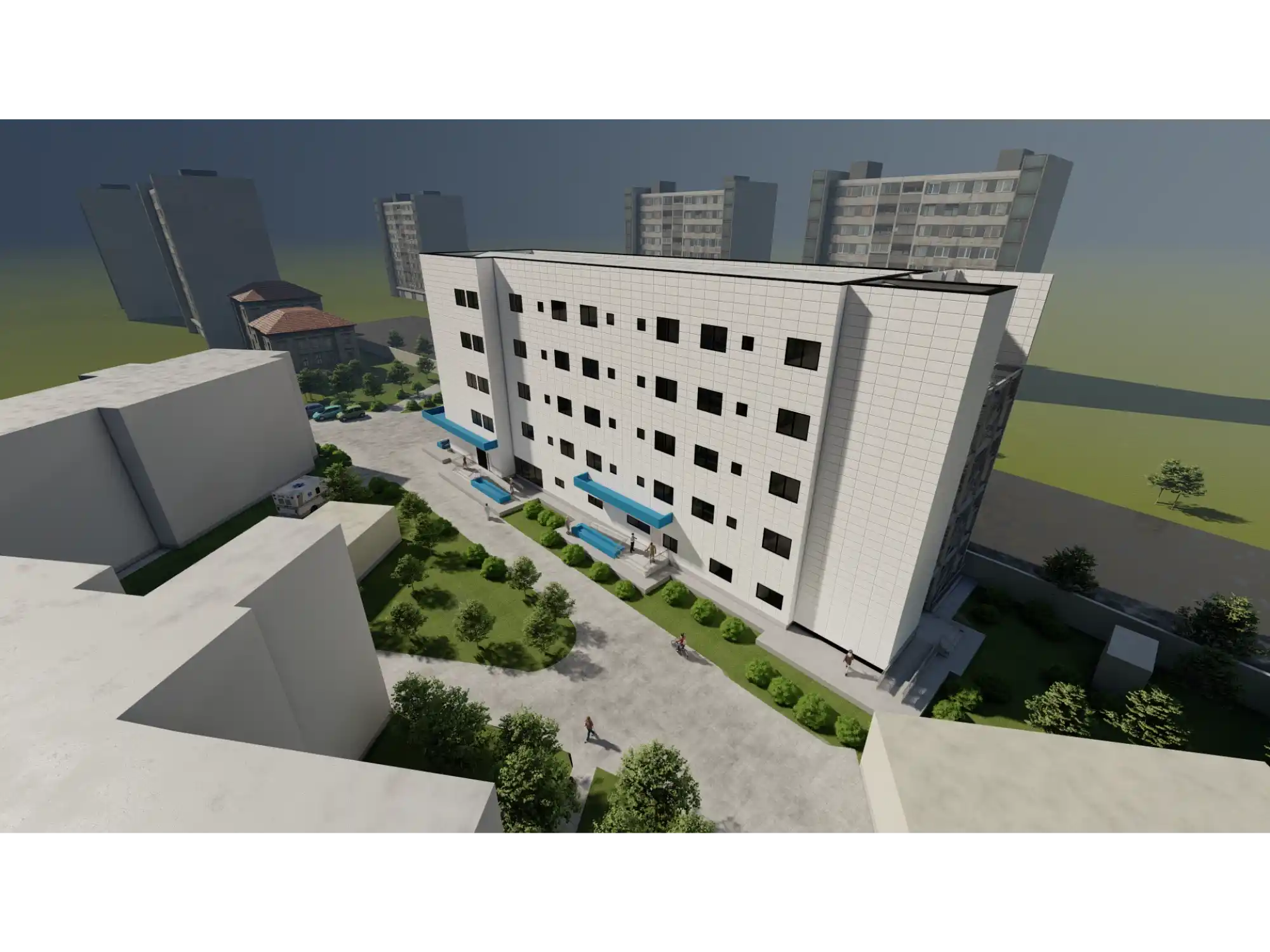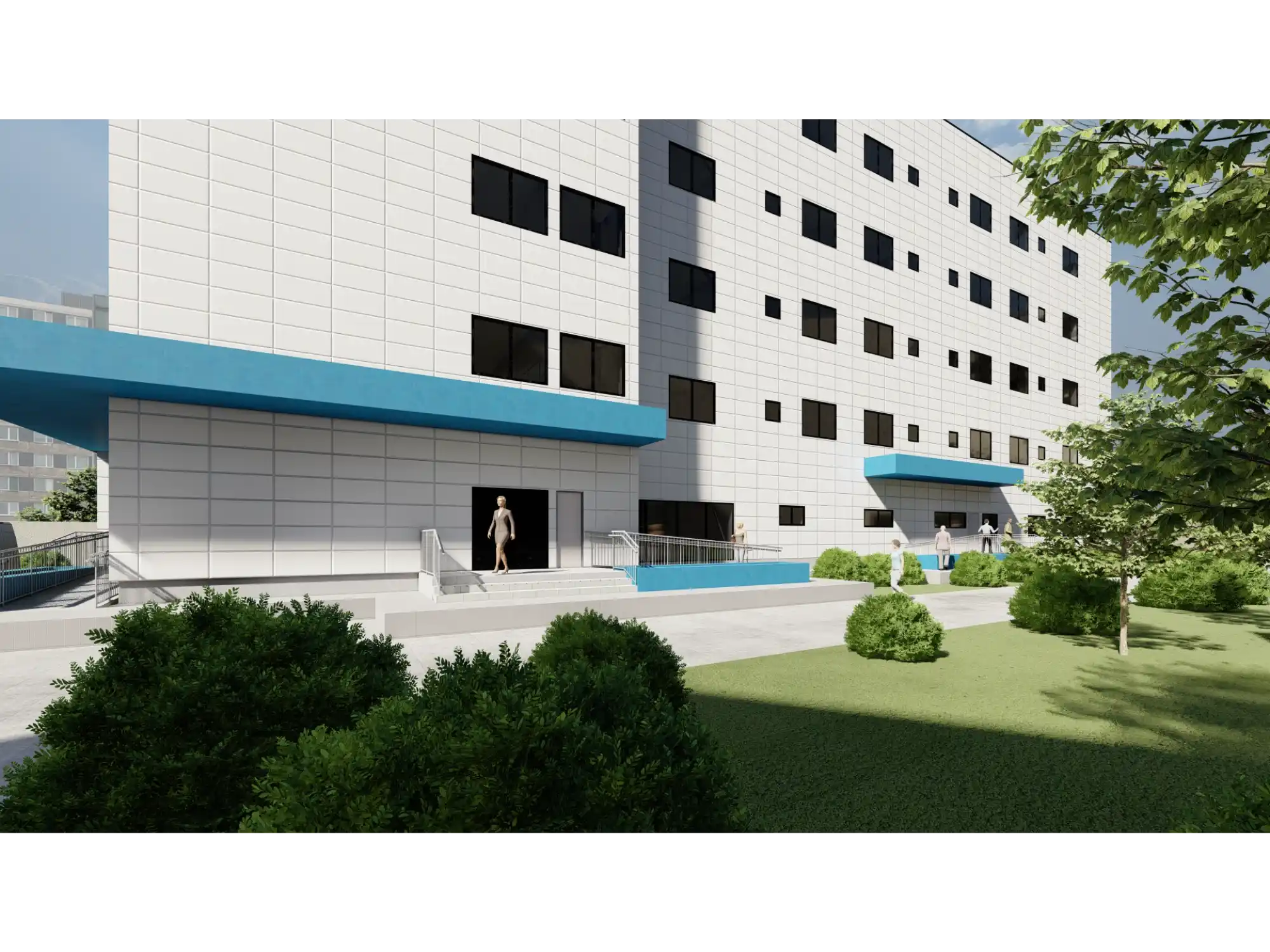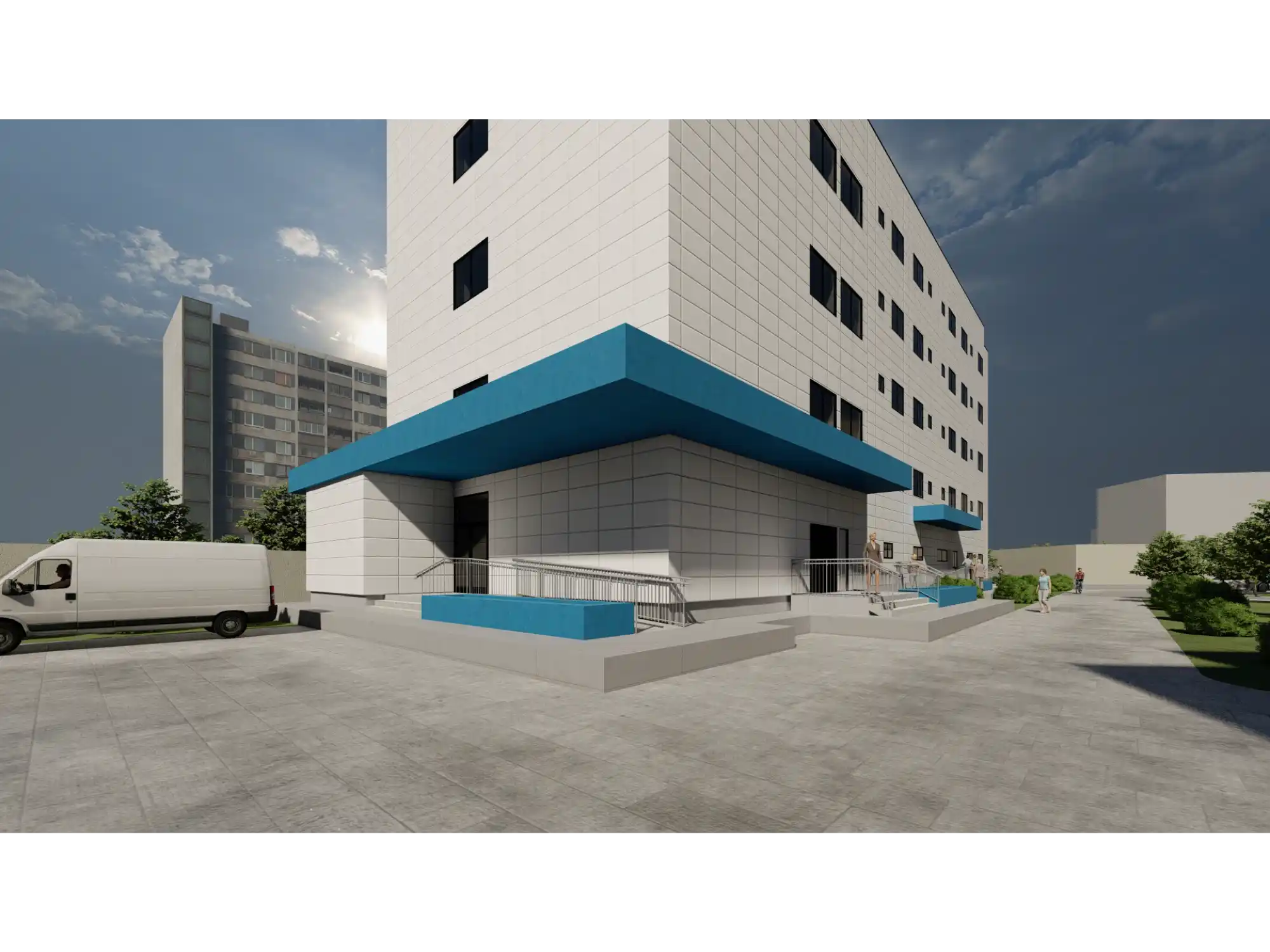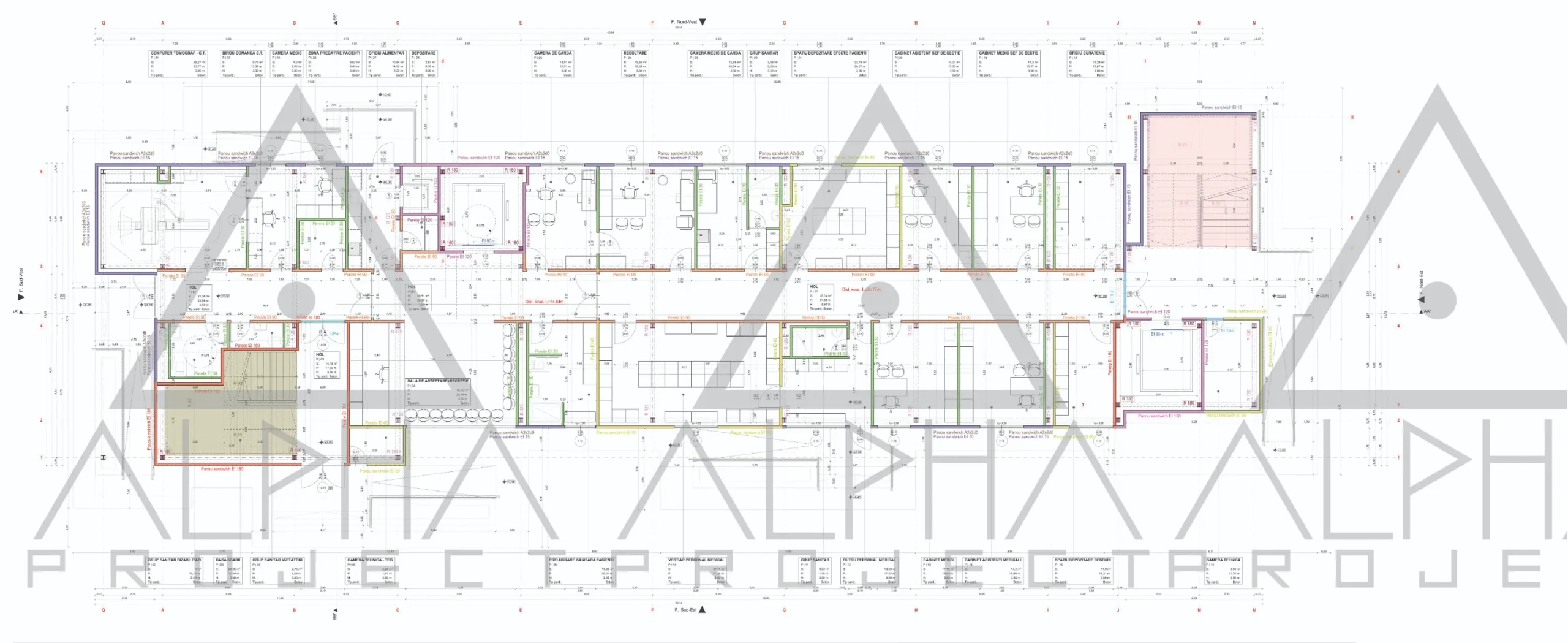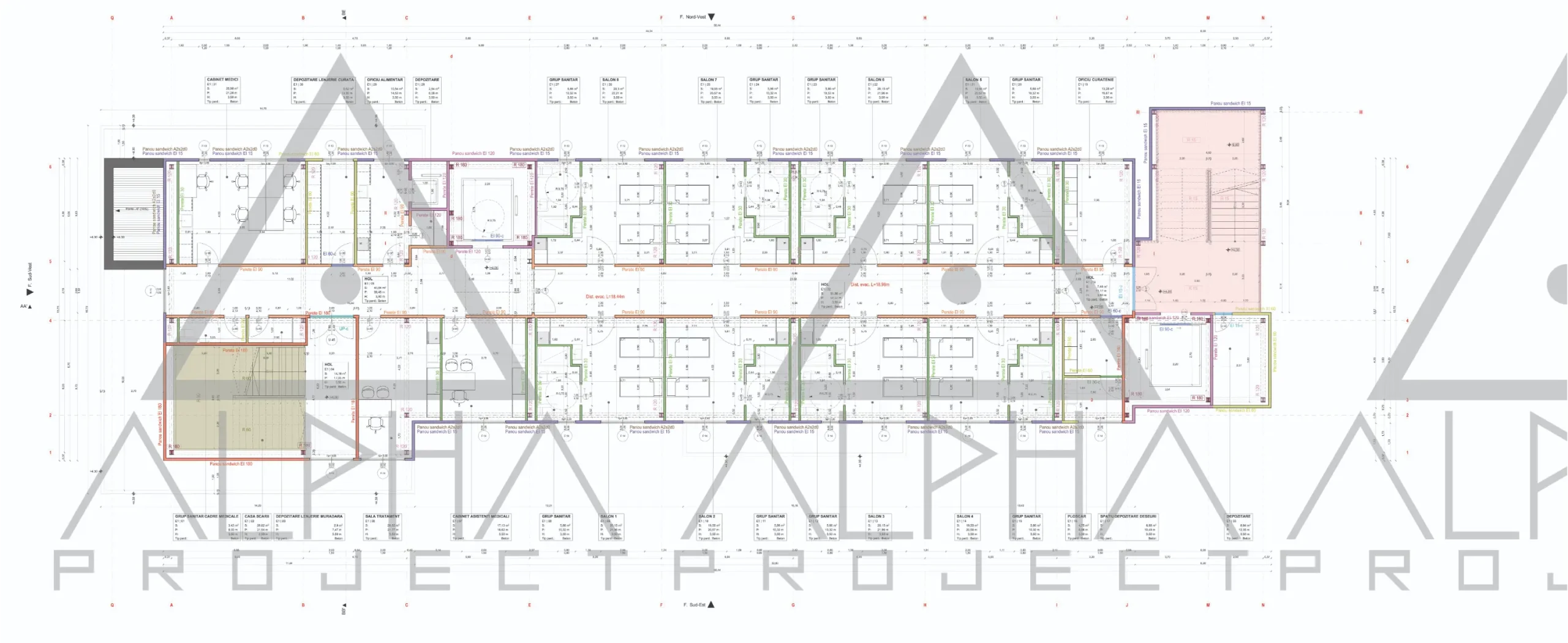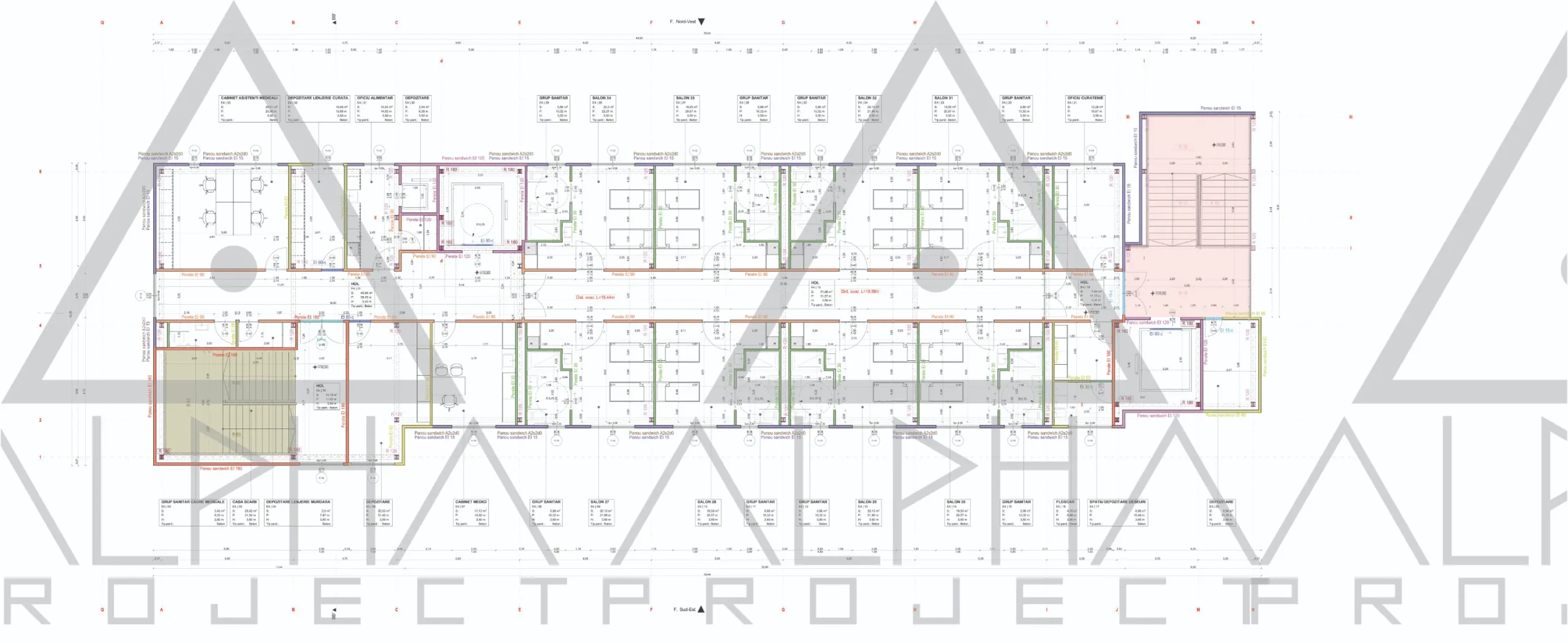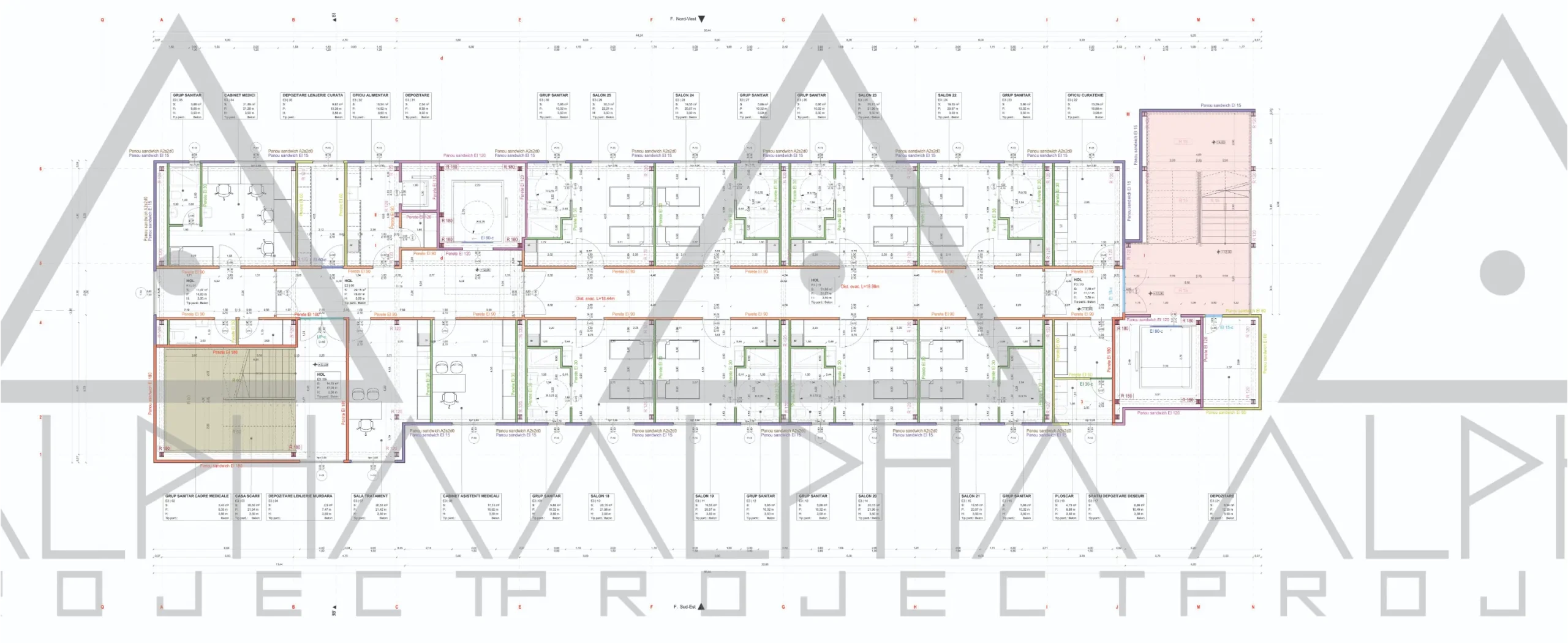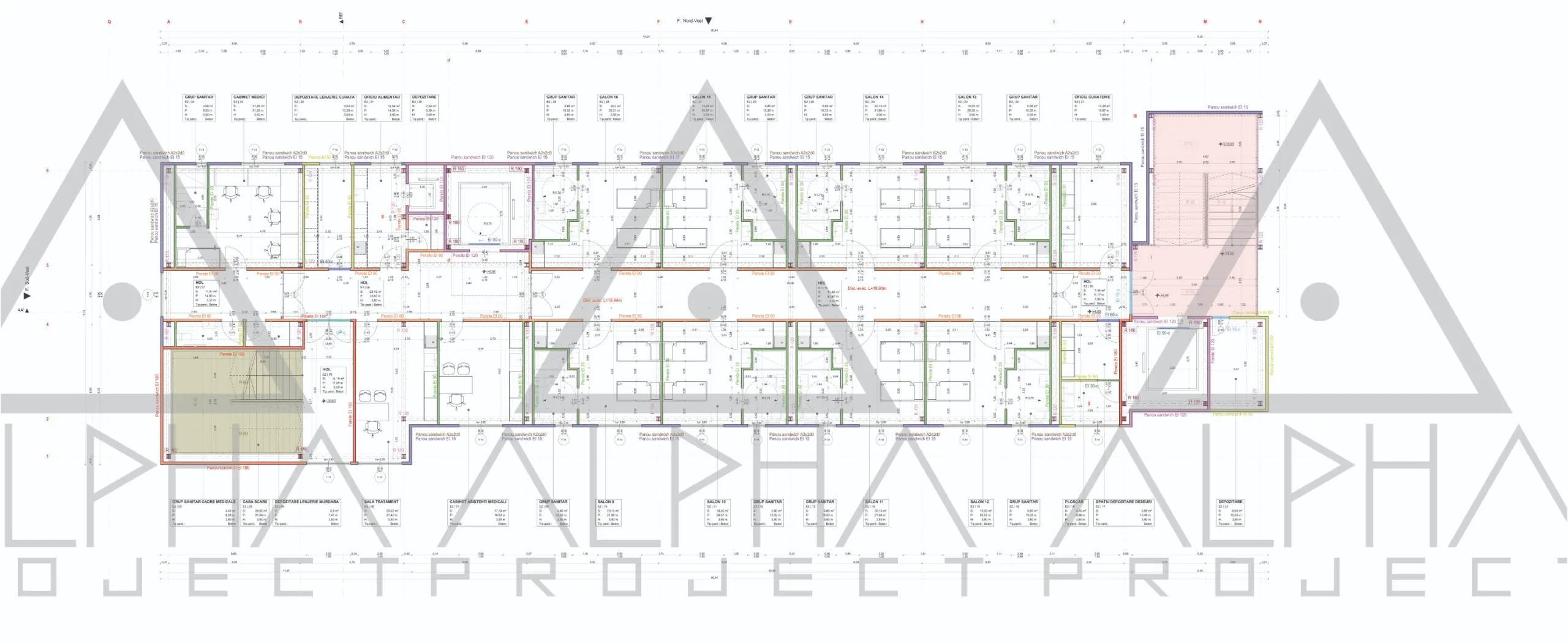

The project is based on the need medical relocation of Pavilion B2 of the Clinical Hospital of Infectious and Tropical Diseases „Dr. Victor Babes”, pavilion proposed for demolition in a separate documentation. During the rehabilitation works, the dismantling of the finishes revealed major structural system deficiencies, and the technical expertise confirmed a high degree of degradation, which made it impossible to consolidate the building economically and safely.
Thus, the recommended solution was to demolish B2 and construct a new building, with the same medical function, in which the activity is carried out in conditions of maximum safety and operational efficiency.
RELOCATION OF THE MEDICAL ACTIVITY OF BODY C19 ,,PAVILION B2,,
Beneficiary
ADMINISTRATION OF HOSPITALS AND MEDICAL SERVICES BUCUREȘTI
Project Type
CONSTRUCTION ON STEEL STRUCTURE
Location
Șoseaua Mihai Bravu, Nr. 281-283, Sector 3, Bucharest, Romania
Engineering
ALPHA PROJECT SRL
Function and capacity of the new body
The newly designed body, built on metal structure, is sized to ensure:
minimum 31 lounges, totaling minimum 61 beds;
lounges equipped with individual sanitary groups and dedicated sinks for medical staff;
cabinets for minimum 10 doctors and nurses;
guard room, rest room, food pantry with a mon-charge;
spaces for acute therapy, technical spaces and waste storage areas.
With this investment, the hospital will be able to increase its patient intake capacity and offer modern treatment conditions in a safe, efficient and up-to-date building.
Urban indicators
Built-up area: 579 sqm
Area deployed: 2.895 sqm
Height regime: P + 4E
Built volume: approx. 12.274,80 mc
Technical description of the construction
The new body is designed as a construction on metal structure, with perimeter enclosures and roof made of sandwich panels, and the exterior joinery is PVC with insulating glass. Inside, the compartments are made of plasterboard on metal structure, finished with antiseptic paints and Tarkett PVC wallpaper in pastel shades to ensure hygiene and a hospital-friendly environment.
The external enclosures are made of 100 mm thick EI15 and EI18 sandwich panels, laid horizontally with concealed fastening. The interior walls between the lounges have fire resistance EI30, and those delimiting the corridors are dimensioned for EI90 and REI180.
Structure and infrastructure
The superstructure of the building consists of metal frames, both vertically and horizontally.
Poles made of HEA 200
Main and secondary beams in IPE 180, IPE 300 and IPE 400
Contraventions from L80x80x8 mm, UPN 100 and UPN 180
Roof panels made of profiles Z200x2.5 mm
Perimeter closures on profiles C150x2.5 mm
The floor plans are made in mixed system: concrete poured on a sheet of sheet metal with the role of lost formwork, the connection between steel and concrete being ensured by Nelson connectors.
Infrastructure is represented by continuous reinforced concrete foundations, with blocks and elevations sized to take the loads of the metal frames. The floor slab is 15 cm.
Facilities
A air-to-water system in heat pump, with cassette fan coils mounted in false ceiling, with four-way discharge. The system provides efficient and adaptable thermal control of medical spaces.
Performance and safety indicators
The building is designed to the highest standards:
Importance class II (P100/2013)
Category B - Particular Importance (HGR 766/1997)
Fire resistance class I (P118/1999)
Low fire risk
 English
  Romanian
  French
  Portuguese